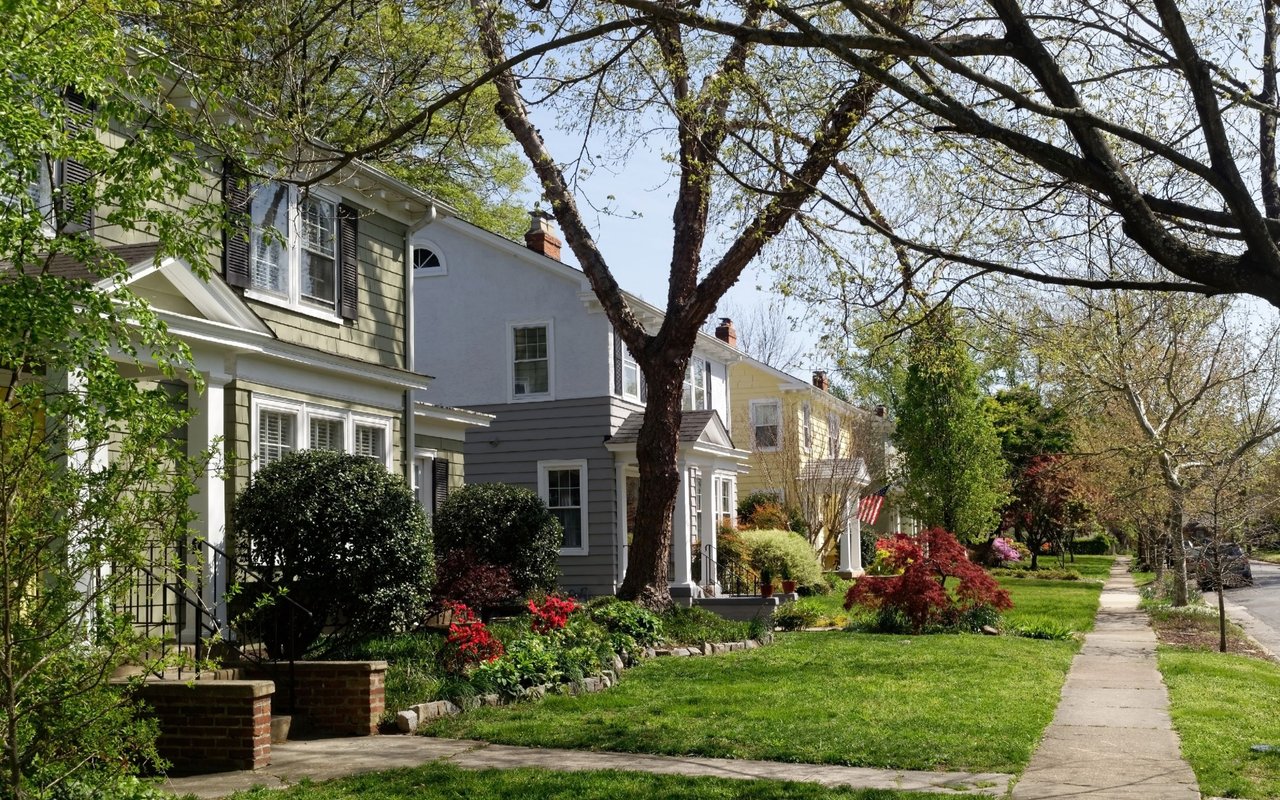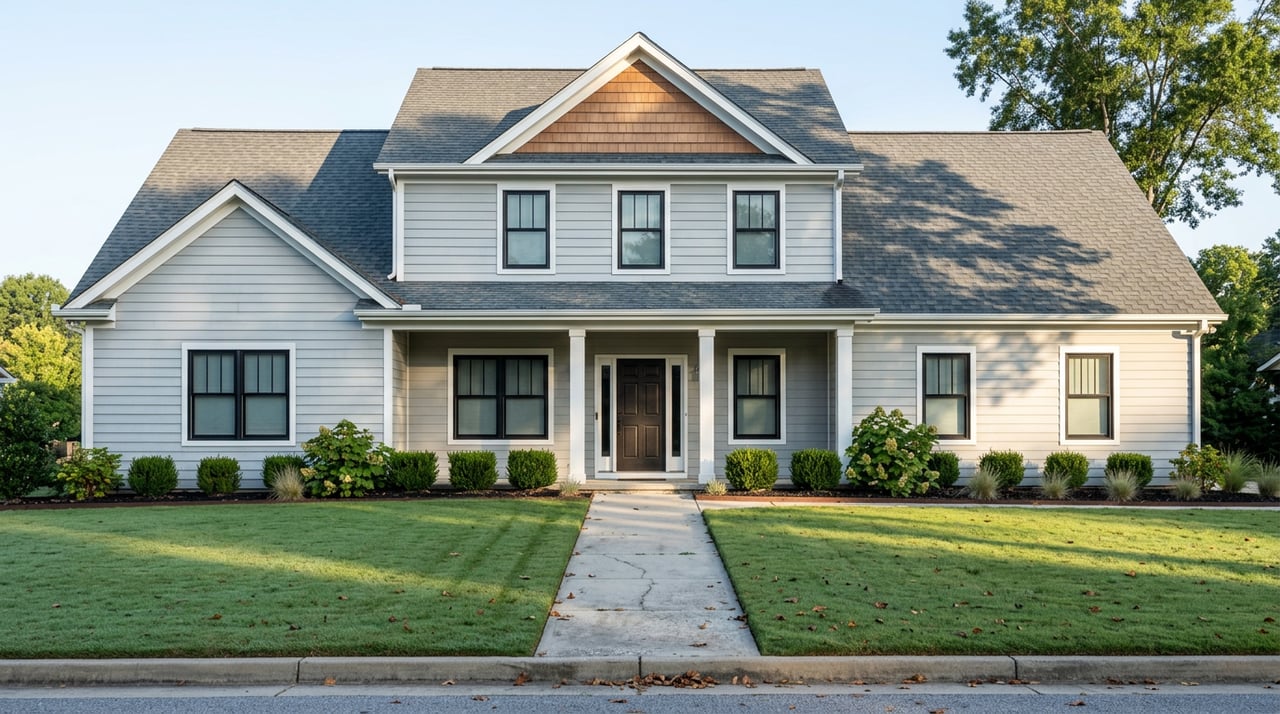
A seller in western Chesterfield does the sensible thing. She pulls three closed comps within half a mile, prices a few thousand under the middle one, and lists on a Thursday. The showings come. The offers don't, or the one offer that arrives asks for more than she expected to give up. She checks the comps again. Nothing is wrong with them. What she can't see from a comp sheet is the buyer who toured her house Saturday morning and toured a new build in Magnolia Green Saturday afternoon, and left with a monthly payment number that made her house feel like the worse deal even though it wasn't the more expensive one.
That's the mechanism worth understanding if you're weighing a sale anywhere near the Route 360 and 288 corridor this fall. It isn't that resale is losing on price. It's that a chunk of new construction in the county is competing on a number resale sellers structurally can't touch without help: the monthly payment, engineered through a builder's captive lender rather than a sign in the yard.
The math a comp sheet can't run
Builders don't usually cut the price tag. Dropping the advertised price on one lot can drag down the appraised value of every other lot in the section, which is the opposite of what a builder selling forty more homes wants. Instead, many use a rate buydown: money deposited into an escrow account at closing that lowers the buyer's interest rate, either for a few years or for the life of the loan, while the sale price on paper stays exactly where the builder wants it.
The most common version is a 2-1 buydown. The buyer's rate runs two percentage points below the note rate in year one, one point below in year two, then settles at the full rate in year three. A permanent buydown works differently: the builder pays discount points upfront so the rate stays reduced for the entire loan.
Run that against a number close to home. Richmond-area mortgage rates were sitting in roughly the 6.1 to 6.4 percent range this spring. On a $409,900 loan, the median sale price across Chesterfield County as of late July 2026, a rate near 6.25 percent puts principal and interest around $2,464 a month. Buy that same rate down two points to about 4.25 percent for year one, and the payment drops to roughly $1,969. That's about $495 a month lower, on paper identical homes, with no price reduction anywhere in the transaction.
The buyer isn't comparing your listing price to the builder's listing price. They're comparing what shows up on the loan estimate.
Four builders, one price band
This isn't a hypothetical dynamic somewhere else. It's happening inside Chesterfield's own borders. Magnolia Green, the master-planned community off Hull Street in Moseley, currently has multiple national and regional builders working active sections at once:
- HHHunt Homes, the exclusive townhome builder in the community's Palisades Cove section
- Mungo Homes, which operates locally under the name it inherited when it acquired the longtime Richmond builder CraftMaster Homes, building in sections like Legacy Park and Charleston Landing
- Ryan Homes and Richmond American Homes, both active in the community's single-family sections
One of those builders markets its Magnolia Green single-family homes explicitly as the only new construction priced under $440,000 within the Cosby High School attendance zone, first-floor primary suites included, yard maintenance included. That's not a stretch upmarket luxury pitch. That's a starter-adjacent price point, sitting in the same band where a lot of Chesterfield resale sellers are trying to compete.
The community's amenity package (a Nicklaus and Tom Clark designed golf course, a resort-style aquatic center, a full-service restaurant called The Grille, miles of paved trail) does some of the persuading on its own. But amenities alone don't explain why a buyer chooses new construction over a comparably priced resale home three miles away. The financing does that.
What the countywide number is hiding
Chesterfield's overall market, as of late July 2026, looks calm on the surface: a median sale price of $409,900, about 2.4 months of supply, homes averaging 21 days on the market, and a list-to-sale price ratio of 99.6 percent. Read quickly, that's a mild seller's market with room for confidence.
Read by sub-market and the picture splits. Midlothian's corridor carries a median closer to $459,000. Chester sits down near $362,000. Bon Air and Brandermill, where more homes cross the $500,000 mark, are seeing more buyer negotiating room than the rest of the county, while well-priced homes in Midlothian, Chester, and Woodlake are still drawing multiple offers. Chester and Swift Creek are appreciating faster than pricier Midlothian.
Here's the part the countywide median doesn't say out loud: the sub-market closest to Magnolia Green's price band and geography, the Midlothian corridor along and near Hull Street and 288, is exactly the sub-market where a resale seller is most likely to lose a buyer to new-construction financing rather than to another resale listing. A Chester seller at $362,000 isn't fighting that same battle in the same way. A seller a few miles closer to Moseley might be, whether their comp sheet shows it or not.
There's a regional tailwind pushing more buyers into that exact comparison, too. Metro Richmond's home sales rose roughly 10 percent in the first half of 2026, compared with 5.5 percent growth statewide, and closed condo and townhouse sales climbed 10.7 percent year over year, well ahead of the 5.2 percent gain in single-family sales. More buyers are actively shopping the attached-home category right now, which happens to be where HHHunt's Palisades Cove townhomes and Mungo's townhome sections sit.
What a seller does with this
The instinct when a house sits past the first weekend is to cut the price. Against new-construction competition, that's often the wrong lever. A price cut can signal the home was overpriced to begin with, and it doesn't address the actual objection, which is usually the monthly number, not the sticker.
A seller-funded concession does more work for less cost in most cases. A closing cost credit or a seller-paid temporary buydown keeps your list price intact for future comps while giving the buyer the same kind of payment relief the builder down the road is offering. It's a different tool solving the same problem the buyer is actually shopping for.
Before choosing a number, it helps to know exactly what the new-construction section nearby is currently offering rather than guessing. Incentive packages shift month to month and builder to builder, and the difference between a temporary and a permanent buydown changes how a seller should think about matching it. A seller planning to price competitively should treat that incentive sheet as part of the comp research, not an afterthought.
A few questions worth asking before you list
Does a builder incentive mean the new home is actually cheaper than a comparable resale? Not necessarily. The list price and the monthly payment are two different levers. A builder can hold the price steady while still delivering a materially lower payment through a subsidized rate, which is exactly why comparing list prices alone can be misleading for both buyers and sellers.
Can a resale seller offer the same kind of rate buydown a builder does? In structure, yes, through seller-paid discount points or a credit toward a temporary buydown. The dollar cost usually lands close to what a price reduction would cost, so it works best when it's planned as a specific concession rather than layered on top of an already-reduced price.
Does this dynamic apply the same way across all of Chesterfield? No. It matters most in the sub-markets closest in price and geography to active new-construction communities like Magnolia Green. A resale home in Chester or deep in an established Woodlake section is competing against a different set of buyers than one along the Midlothian corridor near Hull Street.
If you're weighing whether to list this fall, or trying to figure out what a competing new-construction section down the road is actually offering right now, The Lemus Group can walk through the current incentive landscape alongside your specific comps, in English or Spanish, before you set a number.